

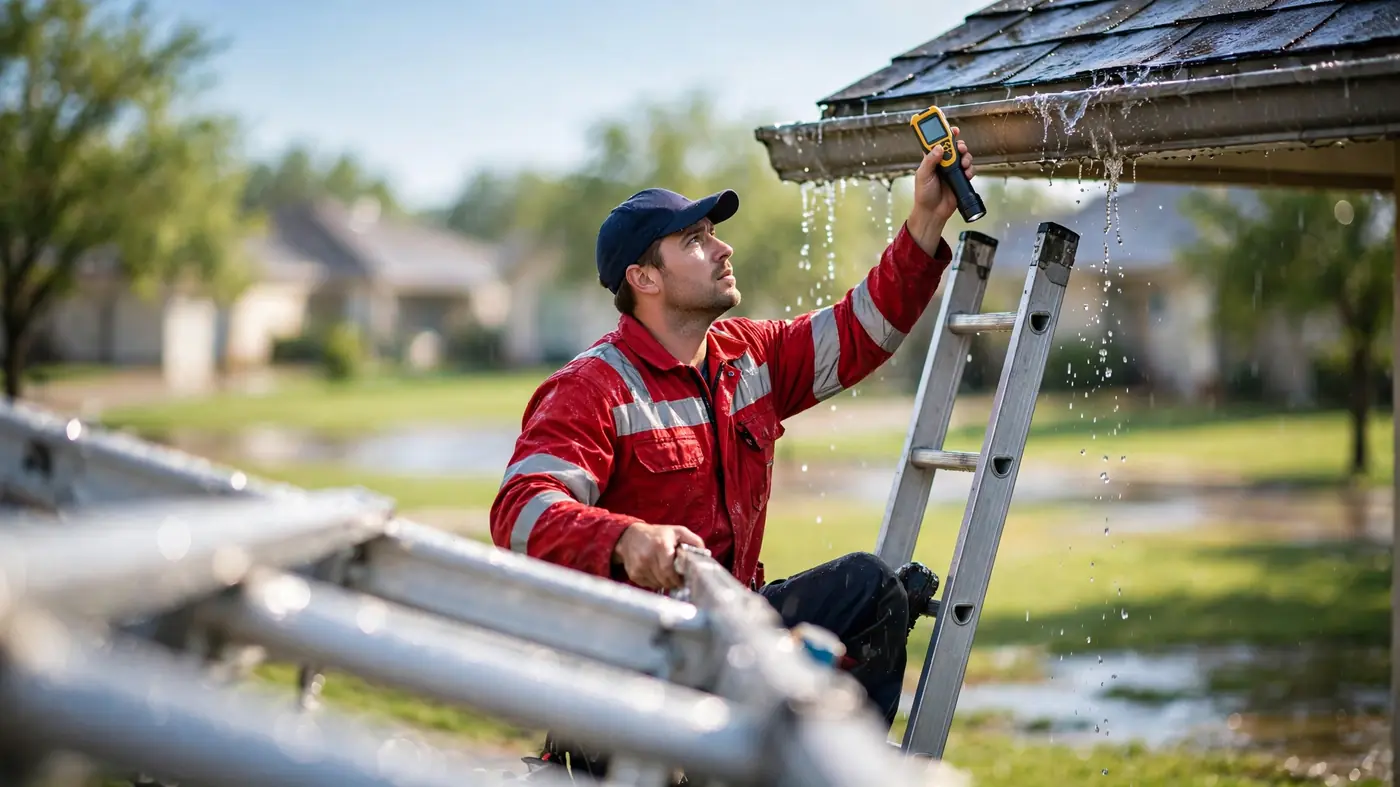
Roof Leak Detection in Texas
A ceiling stain is a message, not a map. It tells you water is getting in. It rarely tells you where.
Roof leak detection is the work of tracing that water back to its true entry point. Across Texas that entry point is often nowhere near the stain below it. Heat, wind driven rain, and aging materials give water a dozen quiet ways in.
This guide explains how professionals actually find a hidden leak. It covers the methods, the signs you can spot on your own, and what detection costs in Texas. It also shows why guessing usually costs more than testing.
What roof leak detection actually is
Finding a leak is a process, not a single gadget. A proper detection visit narrows the search, tests the theory, and rules out the lookalikes.
The lookalikes matter in Texas. A wet ceiling can come from a roof entry, from attic condensation on a humid Gulf night, or from a plumbing line above the ceiling. Treating the wrong source wastes money and leaves the real problem wet.
Most real entries sit where materials change direction or stop. Pipe boots crack in the Texas sun. Flashing separates where a roof meets a wall or a chimney. Valleys collect water and debris. Small failures at those points account for most of the leaks inspectors trace.
A good detection visit ends with answers you can act on. You get the entry point, photos that show it, and a repair scope written against the real cause. Guessing ends with a patch in the wrong place and a stain that comes back.
The methods professionals use, and what each one shows
A methodical visual inspection comes first. The inspector reads the roof in order: surface, valleys, flashings, boots, and edges. Inside the attic, dark streaks on the decking and water trails on rafters point back toward the entry. This step finds most obvious failures and sets up the testing that follows.
Moisture meters confirm where water lives now. A pin meter reads moisture inside wood and drywall. A pinless meter scans the surface without holes. Together they map how far the water spread and whether a suspect area is active or an old stain. A meter tells you where the water ended up. It does not by itself prove where the water came in.
Thermal imaging looks for the pattern heat leaves behind. Wet insulation and damp decking hold temperature differently from dry material. An infrared camera shows those differences as patterns across a ceiling or roof. It works best in the early morning or on a shaded slope, when the sun is not heating the whole surface the same way. Thermal images narrow the hunt fast. They point at suspects, and then each suspect gets confirmed another way.
A controlled water test settles the argument. One person wets a small section of roof at a time, working from low to high. A second person watches from inside. When the drip appears, the section being wet is the source. The method is slow, and it floods nothing it should not. It also gives the clearest yes or no of any method on this page.
Used together, these tools turn a mystery into a location.
Signs you can check yourself, safely
You can gather real clues without climbing anything.
Look at the stain itself. A stain that grows during or right after rain points at the roof. A drip that starts on a dry, sunny day points more at plumbing or condensation in the attic.
Note the timing. A leak that only appears when wind blows rain from one direction often starts at a flashing or an edge detail. A stain that lags the storm by hours often means water traveled before it dropped.
Check the attic with a flashlight on a dry day. Look for dark streaks on the decking above the stain, damp or clumped insulation, and rust on nail tips. A beam of daylight where it should not be is a direct clue.
From the ground, watch the gutters. Granules piling up mean the shingle surface above is wearing thin. Water spilling over a gutter in heavy rain can also mimic a roof leak at the wall below.
Write down what you see and when it happens. Two lines of notes about rain, wind, and timing save an inspector real time. Our page on why your roof is leaking helps you read those signs before anyone climbs up. And never climb on a wet roof to hunt for a leak.
What roof leak detection costs in Texas
Costs split by how deep the visit goes.
A basic inspection folded into a repair estimate is often low cost, and many providers waive it when you book the fix. A dedicated diagnostic visit with moisture mapping and thermal imaging commonly runs $150 to $450 across Texas in 2026. A controlled water test adds time on site and can move the price up.
The range moves with the city, the size and pitch of the roof, and how much testing the roof needs. After a major storm, expect longer waits everywhere in the state.
What you are buying is certainty. You get a documented entry point, marked photos, and a repair scope written against the real cause. A wrong guess costs more. Patching where the stain sits instead of where the water enters means paying twice and living with wet decking between visits. For local pricing, see our roof inspection cost guide for Texas City.
Why water travel makes DIY leak hunting so hard
Water rarely falls straight down from the hole it entered. It lands on the decking or underlayment, runs along the slope, follows a rafter or a seam, and drops where the path ends. The drip can land 5 to 15 feet from the entry.
Texas weather adds tricks. Wind driven rain pushes water uphill under shingle laps and into edges that shed normal rain all year. A roof can pass ten storms and fail the eleventh because the wind came from the wrong side.
That is why the garden hose test so often misleads. Wetting the area above the stain proves little, and flooding a wide area sends water down paths a real storm never uses. Our guide on how roofers find the source of a leak walks through that tracing step by step.
By the time a stain shows on the ceiling, the decking above it may have been wet for months. That hidden time is what turns a small entry into rotten wood and mold. Finding the source early is the whole game.
Roof leak detection in Texas City and Galveston County
This guide covers the whole state because the methods are the same from El Paso to Texarkana. The hands on help behind this site is local.
RoofLeakLocal serves Texas City and Galveston County, including La Marque, Dickinson, League City, Friendswood, Hitchcock, Santa Fe, Galveston, Kemah, Seabrook, Bacliff, and San Leon. We are a guide and referral site, not a roofing company. One call to (409) 290-5353 connects you with an independent local provider who can inspect the roof, document what they find, and quote the repair in writing.
Our roof leak detection page for Texas City shows what that local visit looks like step by step. And if a finding turns into a bigger decision, measure the roof first with the Roof Area Calculator so every quote you hear rests on the same squares.
Frequently asked questions
How much does roof leak detection cost in Texas?
A dedicated diagnostic visit with moisture testing and thermal imaging commonly runs $150 to $450 in 2026. Simple inspections bundled with a repair quote often cost less. Price moves with roof size, access, and how much testing the visit needs.
Can I find a roof leak myself?
You can spot the signs and narrow the area from inside and from the ground. Pinning the exact entry point is harder, because water travels along decking and rafters before it drips. A dry day flashlight check of the attic is the safest useful step.
Does thermal imaging really find leaks?
It finds the temperature differences that wet material leaves behind, and it narrows the search well. A good inspector still confirms the spot with a moisture reading or a controlled water test before anyone repairs anything.
Why is my ceiling stain in a different room than the leak?
Water enters high, runs along the decking and framing, and drops where the path ends. The drip can land 5 to 15 feet from the entry point, sometimes in another room entirely.
How long does a leak detection visit take?
Most average homes take about an hour for inspection and moisture checks. A controlled water test or a steep, cut up roof takes longer. You should leave with photos and a written finding, not a verbal guess.
If water is coming in anywhere around Texas City or Galveston County, do not wait for the stain to grow. Call (409) 290-5353. You describe what you see, and we connect you with a local provider who finds the source and quotes the fix in writing.

8 Comments
Comments are closed.