

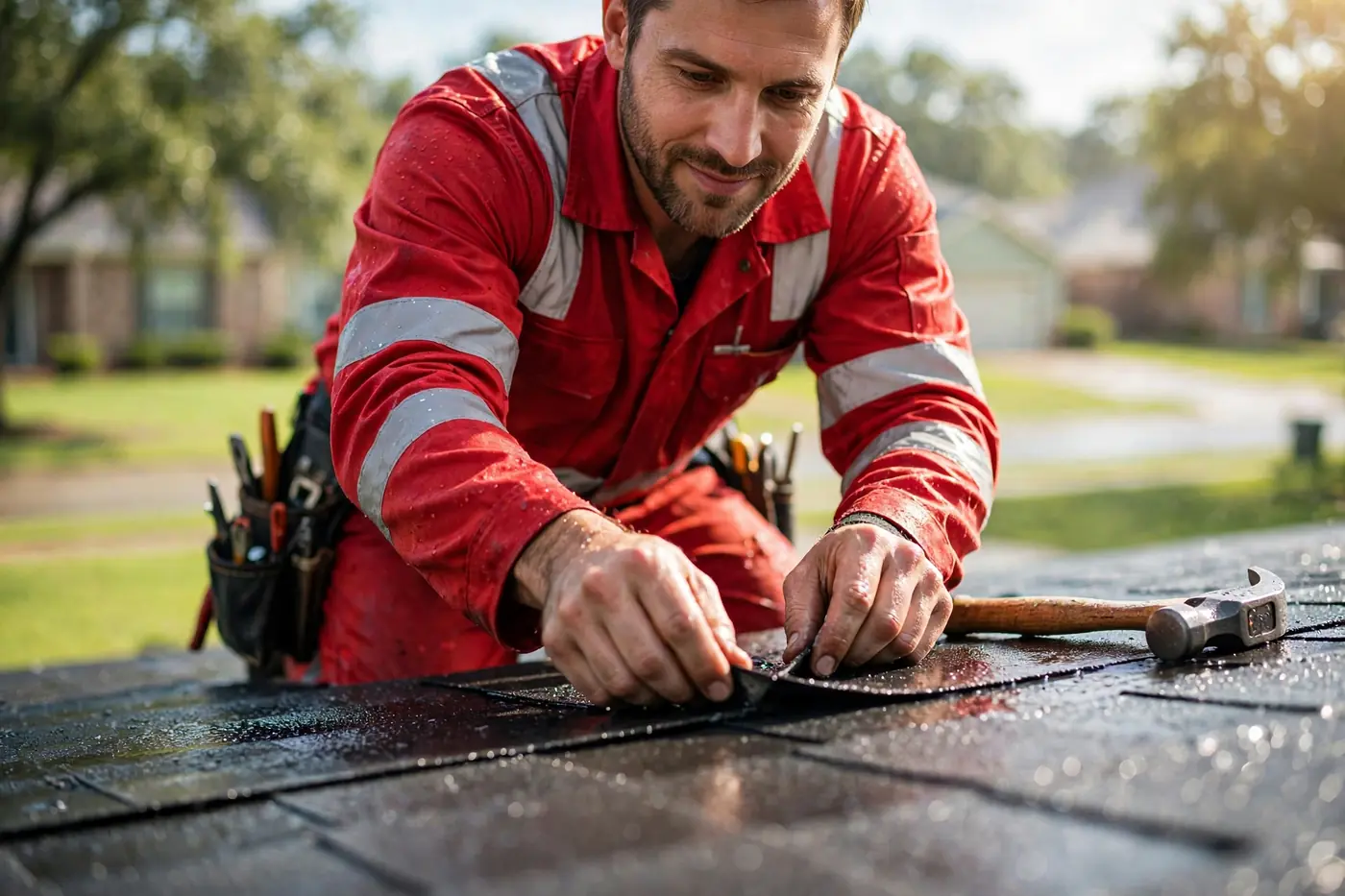
Emergency Roof Leak Repair in Texas
Water running through your ceiling at 2 a.m. does not ask whether your roof is old or new. In Texas it usually arrives with a storm, and the first damage happens inside the house, not on the roof.
An emergency roof leak is active water that keeps doing damage until someone stops it. This guide covers what counts as an emergency, what to do in the first 30 minutes, what a 24/7 crew actually does when they arrive, and what it all costs in Texas.
What counts as a roofing emergency
Treat it as an emergency when water is actively coming through a ceiling or a light fixture. The same goes for a section of roof torn open by wind, a limb through the decking, or water pooling near an electrical panel. A ceiling that bulges or sags under trapped water belongs on this list too.
Other problems are urgent but can wait for daylight and a dry roof. A small stain that has dried and stopped growing. An old water mark you just noticed. A slow drip caught in a bucket, away from fixtures, with dry weather ahead.
When in doubt, active water wins. A leak dripping one cup an hour can soak insulation and drywall all night and cost far more than the repair that stops it.
Your first 30 minutes
Protect people and power first. Keep everyone out from under a bulging ceiling. If water runs near lights or outlets, switch that circuit off at the breaker panel, only if you can reach it without standing in water. Do not touch a wet fixture.
Contain the water. Buckets under the drip, towels around the base, furniture and papers moved out of the way. If the ceiling bulges in one spot, put a bucket under the lowest point and poke a small hole there with a screwdriver. It sounds wrong, and it drains the trapped water in one controlled place instead of across the whole ceiling.
Document before you clean. Record a short phone video that shows the drip and, if you can, the storm outside. Photograph every stain and any damage you can see from the ground or inside. Note the date and the time. An adjuster will ask, and memory fades fast after a storm.
Leave the roof alone. Never climb onto a wet roof, and do not smear sealant in the rain hoping to stop the water. Keep receipts for tarps, buckets, or anything else you buy. Insurance usually wants proof of what you spent to limit the damage.
What an emergency crew actually does on the first visit
The first visit has one job: stop the damage and document it.
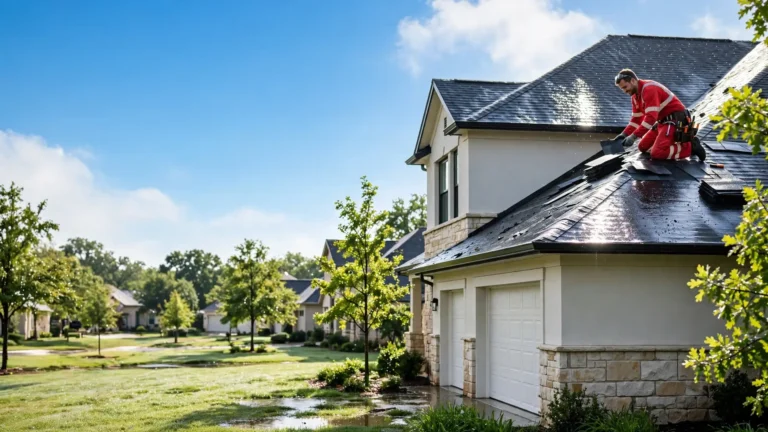
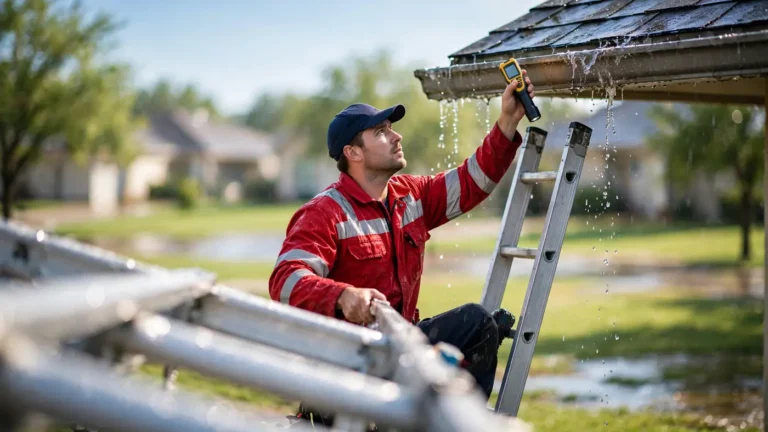
The crew starts inside, reading where the water shows and how it travels. Then they secure the roof. That usually means a tarp weighed down and fastened with boards over the torn or leaking section, or a temporary sealed patch on a small failure. Loose debris comes off, and the attic gets checked for pooled water before it spreads.
Everything gets photographed before and after the tarp. Those photos become part of your insurance file, which is why a real emergency visit produces paperwork, not just a tarp.
The crew finishes by telling you plainly what the permanent fix is. In most cases the permanent repair waits for a dry day. If you are filing a claim, it often waits until the adjuster sees the damaged section as it was found. Our emergency roof tarping guide shows what a proper tarp job looks like, and our Texas City emergency leak repair page walks through the local visit.
After the first visit: the next 48 hours
The tarp buys you time. It does not fix the roof.
Mark the edge of every ceiling stain with a pencil and write the date beside it. If the stain grows past the mark, water is still getting in and the crew needs to know. Check the tarp from the ground after any strong wind. A lifted corner caught early is a quick fix.
Keep the crew photos and invoice in one folder with your own storm photos. The adjuster, the permanent repair quote, and any later warranty question all draw from that same record. Photos taken before the tarp went on show the roof as it was found, and no one can rebuild that evidence later.
What emergency roof leak repair costs in Texas
An emergency visit that stabilizes the roof and documents the damage commonly lands between $250 and $800 in Texas in 2026. Time of night, roof access, and storm demand move the number. The week after a hurricane, waits grow and prices climb with them.
The permanent repair is a separate price, set by the cause. A failed pipe boot and a rebuilt valley are different jobs. Get that quote in writing once the roof is dry and the cause is proven, not on a ladder in the rain.
After hours premiums are normal. Mystery pricing is not. If a number lands far outside the range, ask for the line items. Our emergency roof repair cost guide breaks down what Texas City homeowners see on these invoices.
Insurance notes that protect your claim
Your policy expects you to limit further damage. Reasonable emergency steps like tarping are usually treated as part of the claim, so keep every receipt and invoice.
Document the damaged state before anyone covers it. Good providers photograph first and tarp second. If a contractor offers to start permanent work before the adjuster visits, ask what evidence is being saved for the claim.
One Texas rule protects you here. A contractor cannot legally cover or waive your insurance deductible for you. Anyone offering to do it is waving a red flag, and our guide to roofing scams explains what else to watch for after a storm. For the claim paperwork itself, see how to document roof damage for an insurance claim.
Why Texas roofs fail at the worst possible time
Texas heat works on a roof all summer. Sealant dries out, pipe boots crack, and shingles lose their grip at the edges. Then Gulf weather arrives with wind driven rain that pushes water uphill under laps and into details that shed calm rain all year.
The pattern repeats every season. The roof weakens quietly in the heat, and the first hard storm finds every weak point at once. Hail bruises add entry points that only show up in the next wind from the wrong direction.
After a named storm, every crew in the county is booked. Calling early, even while the rain is still falling, puts you ahead of that queue.
24/7 emergency help in Texas City and Galveston County
RoofLeakLocal is a guide and referral site, not a roofing company. Around Texas City and Galveston County, one call to (409) 290-5353 connects you with an independent local provider who can stabilize the leak, document the damage, and quote the permanent repair in writing. Service covers Texas City, La Marque, Dickinson, League City, Friendswood, Galveston, and the surrounding county towns.
When the permanent fix turns into a bigger decision, sanity check the numbers first. Our Roofing Cost Estimator gives a grounded range before you sign anything, and the roof leak repair cost guide shows what normal repairs run in this area.
Frequently asked questions
How much does emergency roof leak repair cost in Texas?
The stabilizing first visit commonly runs $250 to $800 in 2026, depending on access, time of night, and storm demand. The permanent repair is priced separately once the roof is dry and the cause is proven.
Will insurance pay for emergency tarping?
Usually yes, as damage mitigation, when you keep the invoices and the provider photographs the damage first. Check your policy either way, and keep every receipt.
Should I tarp the roof myself?
Not on a wet roof, and not in the dark. A tarp fastened wrong can do more harm than the leak. Contain the water inside, document it, and let the crew secure the roof safely.
How fast can someone get here during a storm?
It depends on call volume and road conditions, and crews work active leaks first. Calling as soon as water appears, rather than after the storm passes, gets you earlier in the queue.
Is a ceiling stain an emergency?
A dry, stable stain is an inspection call. A stain that is growing, dripping, or bulging is an emergency, because the water behind it is still moving.
Water does not wait for business hours, and neither does the damage. If your roof is leaking now anywhere in Texas City or Galveston County, call (409) 290-5353. We will connect you with a local provider who can stop the water and document it properly.

2 Comments
Comments are closed.