

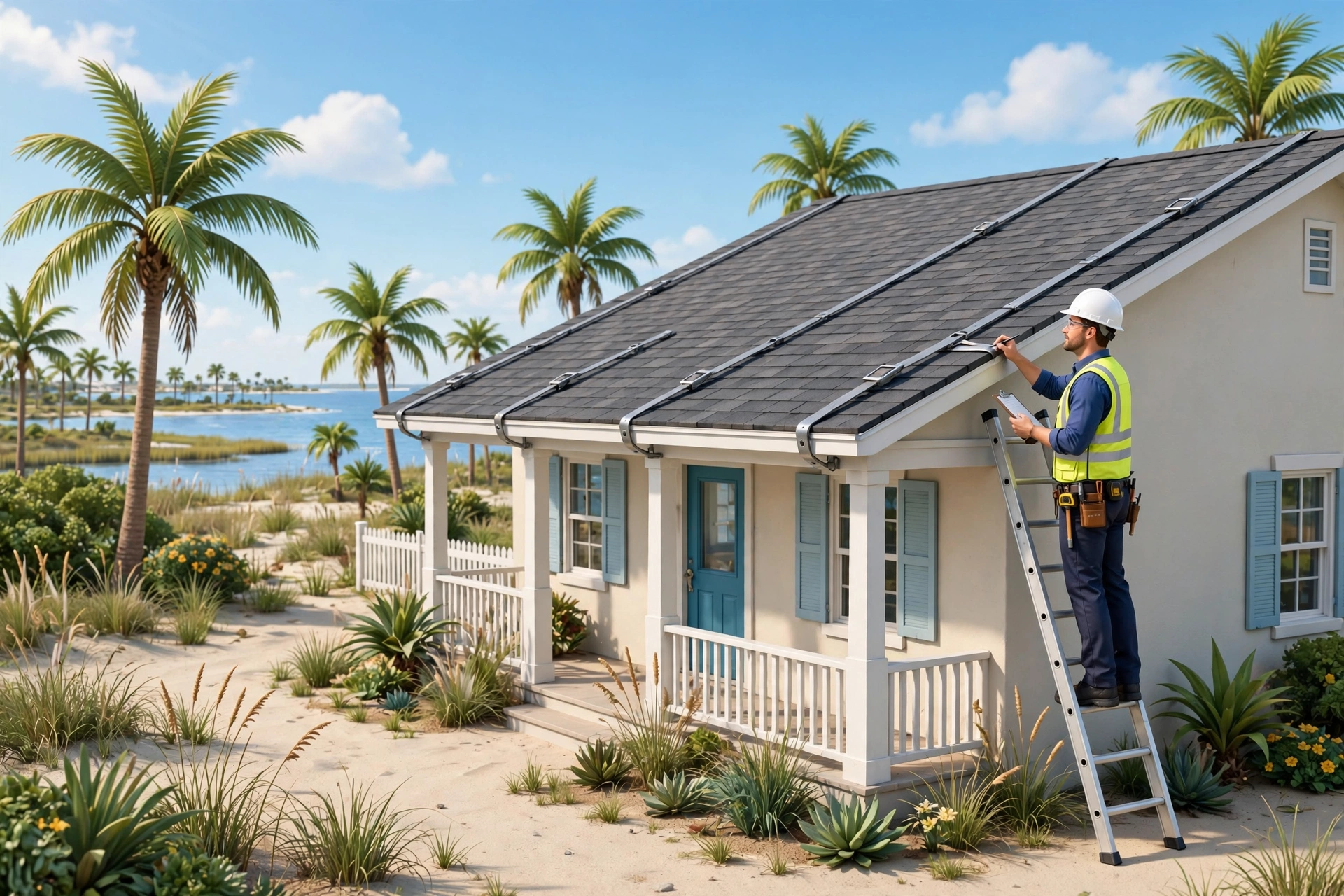
WPI-8 Windstorm Certificate in Galveston County
Every year in Galveston County, home sales and insurance policies quietly stall over one piece of paper: the WPI-8. It is not the roof itself that stops the deal. It is the missing certificate that proves the roof was built to windstorm code.
If you are buying, selling, or renewing insurance on a coastal home, this certificate matters more than almost any other document in the file. Here is what it is, when you need one, and what to do if the roof does not pass.
What a WPI-8 actually is
A WPI-8 is a certificate of compliance issued through the Texas Department of Insurance windstorm program. Galveston County sits in the state’s designated windstorm area along the Gulf Coast, where hurricane exposure is highest. In this area, windstorm and hail coverage usually comes through the Texas Windstorm Insurance Association, often called TWIA.
The WPI-8 certifies that a structure, or a specific part of it like a roof, was built or repaired to the windstorm building code. Metal fasteners, decking attachment, underlayment, and shingle wind ratings are all part of what the code looks at.
In plain terms, it is proof the work was done to coastal standard. It is not a warranty, and it is not a home inspection report. It answers one narrow question: does this construction meet the windstorm code, yes or no.
When a missing certificate blocks the plan
Selling a home. Buyers need windstorm insurance. Lenders require insurance. If the home has no WPI-8 on file for the roof, the buyer’s policy can be refused or delayed, and a closing date can slide or fall apart entirely. Sellers often discover this mid-transaction, which is the worst time to discover it.
Buying a home. You inherit whatever was or was not documented. A roof replaced ten years ago without inspections may have no certificate, and the problem becomes yours at the closing table. Asking for the WPI-8 early, before the option period runs out, is far cheaper than fixing it later.
Insuring or renewing. Carriers in the windstorm area check. A home without certification can face higher cost, limited options, or a windstorm policy that does not happen at all. A valid certificate on file makes the renewal conversation boring, which is what you want.
Who issues the certificate
The WPI-8 itself is issued by the Texas Department of Insurance after a passing inspection. Inspections are done by appointed inspectors. In practice, that means a licensed professional engineer appointed for windstorm inspections, or another inspector appointed under the state program. Ordinary home inspectors and roofing contractors cannot certify their own work under this program.
Timing is the part most people miss. Certain parts of a roof job can only be verified while the work is in progress, such as how the decking is nailed off and what goes down before the shingles. A planned inspection during the job is straightforward. Getting a finished, covered roof certified after the fact can be possible, but it is harder and sometimes needs more documentation or partial re-inspection.
This is why the certificate conversation belongs at the start of any roof work, not at the end. Our WPI-8 repair guide covers the repair side of windstorm compliance in more detail.
What commonly fails a windstorm inspection
Failures are rarely dramatic. They are usually small, cheap-to-fix details that pile up:
- Decking attachment. Plywood or deck boards not nailed to the pattern the code requires, so the whole roof surface can lift in high wind.
- Wrong shingles for the wind rating. Shingles carry wind speed ratings. Coastal zones need the ratings matched to the local wind zone, not whatever was on sale.
- Fastener problems. Too few nails per shingle, nails placed outside the fastening zone, or fasteners corroded by salt air that no longer hold.
- Missing or wrong underlayment. The layer under the shingles is part of the water defense when wind drives rain sideways. Skipping steps here shows up in inspections.
- Sloppy flashing and edges. Loose drip edge, unsealed penetrations, and flashing that a storm can peel back starting at one corner.
None of these need a whole new roof by default. Most fail items are repair-sized, which is the good news hidden in a failed inspection report.
How to fix a failed inspection and get re-inspected
Read the report like a work list, because that is what it is. Each deficiency the inspector noted is a fixable item. A qualified local roofer corrects them, starting with the structural ones like decking attachment and fastening, then the surface ones like flashing and edge metal.
When the work is done, schedule the re-inspection promptly. Keep every invoice, photo, and product document from the repair. Paper travels with the property, and the next buyer or carrier will ask for exactly that file.
If the roof is near the end of its life anyway, use the failed inspection as decision evidence. Certified repairs on a young roof make sense. Pouring compliance money into a worn-out roof often does not, and a full replacement done under inspection produces a clean certificate and a clean file. Our roof replacement cost guide for Texas City shows what that job runs in 2026, if that conversation is coming.
A practical checklist before you buy, sell, or renew
- Ask whether a WPI-8 is on file for the roof, and get a copy, not a verbal yes.
- If a roof was replaced in the last 15 years, ask who did the windstorm inspections during that job.
- Budget for a roofing inspection before listing or during the option period. Our roof inspection cost guide shows what that visit runs.
- If deficiencies exist, get the repair and re-inspection done before the closing date pressure starts.
- Keep every certificate, inspection report, and invoice in one folder. Lenders, buyers, and carriers all ask for the same paper.
Get the roof checked before the paperwork is due
A certificate problem found early is a scheduling issue. The same problem found at the closing table is a deal issue. If a home in Texas City or Galveston County is changing hands, or a policy is up for renewal, have the roof inspected with the certificate question in mind.
Call (409) 290-5353. RoofLeakLocal connects you with an independent local provider who can inspect the roof, flag what would fail, and tell you what the fix looks like in writing. We are a guide and referral site, not a roofing company, and asking costs you nothing.
Frequently asked questions
Can I sell a Galveston County home without a WPI-8?
Sometimes, but it narrows your buyers. Most buyers need a mortgage, and lenders require insurance. Without a certificate, windstorm coverage through TWIA can be refused or priced as a problem, and buyers walk or demand credits. Getting the roof certified before listing removes a common closing delay.
Who can perform a windstorm inspection?
Inspections under this program are done by appointed inspectors, which includes licensed professional engineers appointed for windstorm work. The certificate itself is issued by the Texas Department of Insurance. A roofer can do code-compliant work, but cannot certify their own job.
Can an older roof get a WPI-8 now?
Often yes, if the roof meets the windstorm code or can be brought to it with repairs. An inspector may need documentation of materials and installation, and some items can only be fully verified during installation. An inspection tells you exactly where your roof stands. Our WPI-8 repair guide explains the repair path.
What happens if my roof fails the inspection?
You get a list of deficiencies. Most are repair-sized items such as fastening patterns, flashing, or edge work. Fix the listed items, then schedule a re-inspection. A failed inspection is information, not a dead end, and the written list makes the fix easier to quote.
Is the WPI-8 the same as a roof inspection?
No. A roof inspection is a general condition check by a roofing professional. The WPI-8 process is a code compliance certification through the state windstorm program, and only an appointed inspector’s passing report leads to the certificate. Many owners need both, for different reasons.
2 Comments
Comments are closed.